The short answer
A pip measures a conventional price increment, a spread is the bid–ask difference, and a lot describes position size. Pip cash value depends on the pair, contract and account currency.
- Identify the pip convention for common currency pairs.
- Explain why a trade starts with a spread cost.
- Connect lot size to pip value and account risk.
What is a pip in forex?
For many major currency pairs, one pip is 0.0001. For pairs quoted with Japanese yen, one pip is often 0.01. Some platforms display fractional pips, sometimes called pipettes. Always check the quote precision and contract specification before doing the calculation.
A 20-pip move is a price description, not a cash result. The cash value depends on position size, the pair and the currency in which your account is denominated.
Spread is a cost of access
The bid is the price available when selling and the ask is the price available when buying. Their difference is the spread. If you buy at the ask and immediately sell at the bid, the price must move enough to cover the spread before the position is positive before other costs.
Spreads can widen around news, market open, rollover and low-liquidity periods. A strategy that looks fine on a clean chart may behave differently after real execution costs are included.
Lot size changes the sensitivity
A standard lot is commonly 100,000 units of the base currency, a mini lot 10,000 and a micro lot 1,000, but products differ. The lot label is less important than the actual contract size and pip value shown by the venue.
Use the site’s pip calculator to explore examples, then compare the result with a broker’s specification. If the account currency differs from the quote currency, conversion can change the final value.
- Confirm contract size.
- Confirm pip decimal convention.
- Check account-currency conversion.
- Include spread, commission and rollover.
Pair a pip with a cash value
A two-pip spread has no single cash cost until you know the position's pip value in your account currency. For a position worth $1 per pip it is about $2; at $10 per pip it is about $20, before other charges.
Read the dedicated spread-cost worksheet for the bid/ask calculation, then use the pip tool with the pair and lot assumptions shown by your broker.
A 25-pip move
If a pair moves 25 pips in your direction and the position’s pip value is 2 per pip, the gross result is approximately 50 before spread, commissions, financing and conversion. The same 25 pips with a different lot size can produce a very different cash result.
Choose the next useful step
- Forex spread cost explained with a pip example
See how bid and ask prices create an approximate spread cost, with a pip-value worksheet and limits for different currency pairs.
- Forex for beginners: read a currency pair
Understand currency pairs, bid and ask prices, sessions, pips and the risk controls every forex beginner should learn first.
- Leverage and margin: exposure is not safety
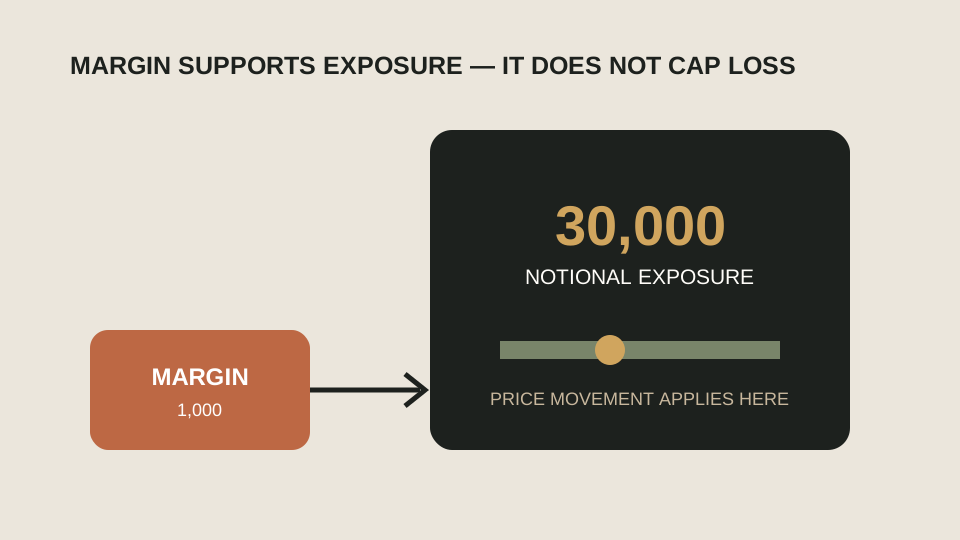
Understand leverage, margin, liquidation risk and why a small deposit can control a much larger market exposure.
Carry these four ideas forward.
- Check the pair’s pip convention.
- Use the actual contract size.
- Estimate the spread at your trading time.
- Convert the result into account currency.
Three questions before the next tab.
Choose the answer that best matches the lesson. This is a memory check, not a market signal.
Continue with original sources.
These links provide definitions and current context. Product rules, regulation and network details can change, so verify time-sensitive information at the source.
Before you move on
Is one pip always the fourth decimal place?+
No. Many yen pairs use the second decimal place, and some platforms show fractional pips. Check the instrument quote.
What is a lot in forex?+
A lot is a unit of trade quantity. Standard, mini and micro labels are common, but the contract specification is the authority.
Does a lower spread mean no risk?+
No. Spread is only one cost. Price movement, leverage, liquidity, gaps and execution remain risks.