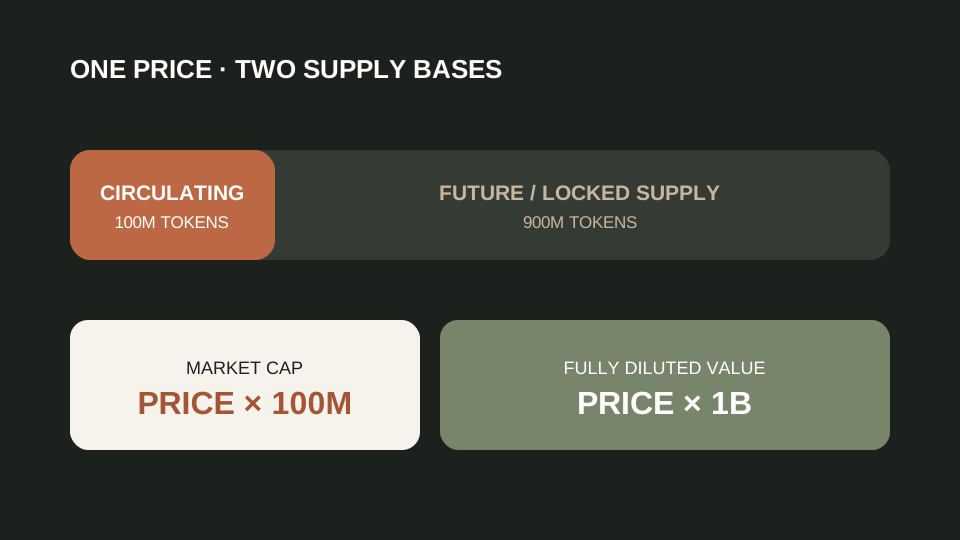
- Calculate market cap and FDV from price and supply.
- Explain why a large FDV gap can matter.
- Add unlocks, liquidity and token rights to a research checklist.
Market cap uses circulating supply
Circulating market cap multiplies current price by the estimate of tokens available in the market. If a token trades at 2 and 100 million units circulate, the quoted market cap is 200 million. The circulating figure can depend on methodology, so compare the data provider’s definition with project disclosures.
Market cap is a valuation convention, not a bank balance. A relatively small trade can set the marginal price used across every circulating token.
FDV applies price to a broader supply
Fully diluted valuation typically multiplies current price by maximum or fully diluted supply. A token with 100 million circulating and one billion maximum supply at 2 would show a 2 billion FDV. That gap signals that substantial future supply may exist, but timing and conditions determine its significance.
Some supply may unlock for teams, investors, rewards or ecosystem programmes. Emissions, burns and governance can change the path, so a single FDV figure is the start of research rather than the conclusion.
Combine valuation with liquidity and rights
Review the unlock calendar, holder concentration, treasury control, exchange liquidity, token utility and the legal or governance rights attached to ownership. A low nominal price does not mean a token is cheap when supply is very large.
Run several price-and-supply scenarios and write down what would change the thesis. Verify figures with project documentation and a reputable data provider because supply reporting can change.
- Compare circulating, total and maximum supply.
- Identify the next material unlocks.
- Inspect concentration and usable liquidity.
- Do not treat FDV as guaranteed future market cap.
The valuation gap
At 1 per token, 50 million circulating tokens imply a 50 million market cap. If maximum supply is 500 million, FDV is 500 million. The tenfold gap does not predict price, but it makes future supply a central research question.
Turn the concept into a reviewable decision.
Write the instrument, the evidence you checked, the important assumption and the condition that would make your original idea wrong. Then use a relevant calculator or paper-trading example before considering real exposure. This step connects the lesson to a repeatable process and makes hindsight easier to detect.
Current prices, regulations, fees and product specifications can change. Verify them at a primary source and keep the educational example separate from your personal financial circumstances.
Carry these four ideas forward.
- Verify the supply definition.
- Calculate market cap and FDV.
- Read the unlock schedule.
- Check liquidity and concentration.
Three questions before the next tab.
Choose the answer that best matches the lesson. This is a memory check, not a market signal.
Continue with original sources.
These links provide definitions and current context. Product rules, regulation and network details can change, so verify time-sensitive information at the source.
Before you move on
Does FDV predict future market cap?+
No. Future price, supply, demand, burns and project outcomes can all change.
Is a low market-cap token cheap?+
Not necessarily. Valuation, liquidity, quality, supply and risk must be assessed together.
Why do providers show different supply figures?+
They may use different methodologies or update schedules. Read their definitions and compare primary disclosures.