- Calculate an illustrative margin requirement.
- Explain equity, used margin and free margin.
- Recognise why margin calls and liquidation rules differ by provider.
Start with notional exposure
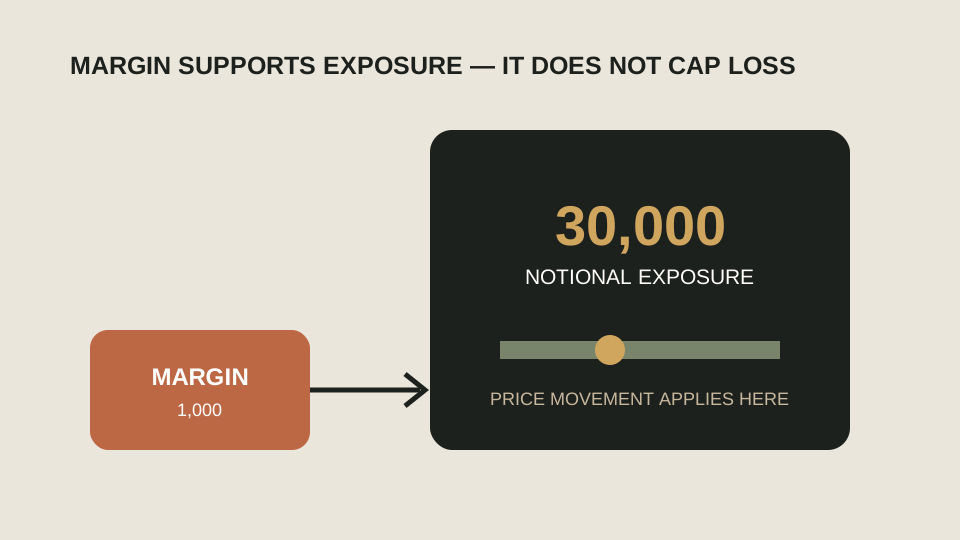
A standard forex contract can represent a large amount of base currency. If an account uses 30:1 leverage, the simple initial margin rate is approximately 1 divided by 30, or 3.33%. A notional position of 30,000 account-currency units would therefore require roughly 1,000 in this simplified example.
The position still responds to price changes on the full notional exposure. Margin changes how much collateral is posted; it does not shrink the market movement applied to the position.
Equity and free margin move with open results
Balance usually reflects closed activity, while equity includes the unrealised result of open positions. Used margin is tied to open exposure. Free margin is the remaining equity available under the provider’s rules. If losses reduce equity, the margin level can fall even when no new position is opened.
Providers may define margin level, warning thresholds and close-out sequencing differently. Read the account agreement and current product specification.
Plan for stress, not only entry
Before entering, model a larger adverse move, wider spread and correlated positions. News, rollover and thin liquidity can alter equity quickly. A stop is an instruction and may not fill at the intended price during a gap.
Keep a buffer above the platform minimum and size from acceptable cash loss rather than from the largest position the margin system permits.
- Check maximum leverage for the instrument.
- Know margin-call and close-out thresholds.
- Include all correlated open exposure.
- Use the margin calculator as an illustration, then verify provider rules.
Why 1,000 margin is not 1,000 risk
At 30:1, 1,000 may support roughly 30,000 of notional exposure. A 2% adverse move on that notional is about 600 before costs. The collateral amount alone does not describe the possible loss.
Turn the concept into a reviewable decision.
Write the instrument, the evidence you checked, the important assumption and the condition that would make your original idea wrong. Then use a relevant calculator or paper-trading example before considering real exposure. This step connects the lesson to a repeatable process and makes hindsight easier to detect.
Current prices, regulations, fees and product specifications can change. Verify them at a primary source and keep the educational example separate from your personal financial circumstances.
Carry these four ideas forward.
- Calculate notional exposure.
- Verify leverage and conversion rates.
- Model used and free margin after a loss.
- Read the provider’s close-out rules.
Three questions before the next tab.
Choose the answer that best matches the lesson. This is a memory check, not a market signal.
Continue with original sources.
These links provide definitions and current context. Product rules, regulation and network details can change, so verify time-sensitive information at the source.
Before you move on
Is margin borrowed money?+
It is collateral supporting leveraged exposure; product structure and financing differ, so check the provider agreement.
Can a stop prevent a margin call?+
Not with certainty. Slippage, gaps or platform rules can produce a different outcome.
Why does required margin change?+
Price, conversion rates, leverage tiers, position size and provider rules can all change it.