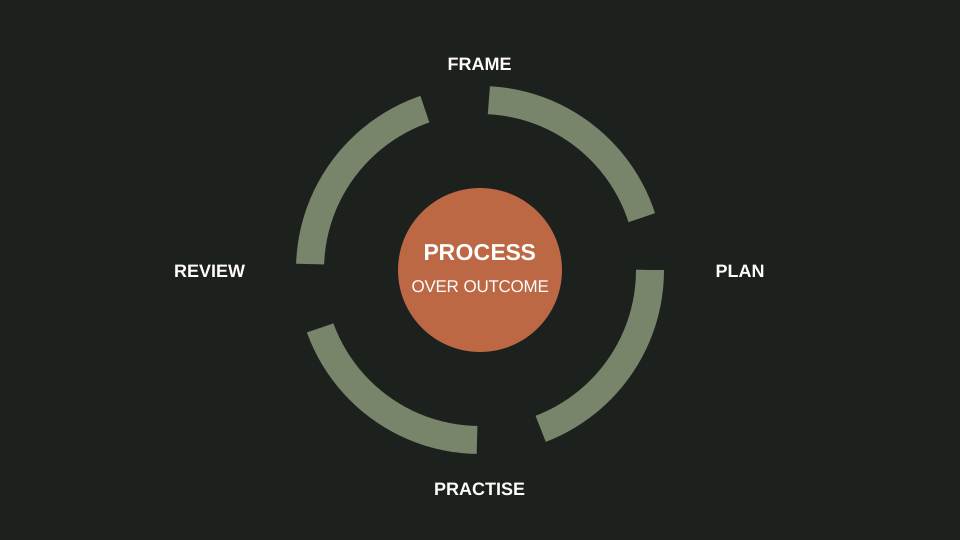
- Set one measurable practice rule.
- Record decisions before seeing the outcome.
- Review execution mistakes apart from simulated profit.
Define the exercise before trade one
Choose one sample instrument, one setup definition and a fixed illustrative cash-risk limit. Write a starting balance and decide the stop rule before opening the simulator. If you change the setup halfway through, note the change; otherwise your sample mixes different rules.
The CryptoStocks simulator uses fixed sample prices and stores the portfolio locally in your browser. It has no broker connection, live market feed or real orders. Browser storage can be cleared, so keep the journal separately if you want a durable record.
Record the same fields for every attempt
Before each simulated order, record the date, instrument, entry reason, entry price, invalidation stop, size, estimated loss and expected cost assumptions. After closing, note the exit reason, result in cash and units of planned risk, and whether the original rule was followed.
For example, an illustrative $20 planned loss followed by a $30 simulated gain is +1.5R before costs, where R is the planned $20 risk. A $20 loss is −1R only if execution matches the stop. The R label lets you compare differently sized attempts; it does not reveal future odds.
Review all 20 entries, including the bad ones
At the end, count how many trades followed the rules, how often the stop or size was changed, and whether mistakes cluster around one decision. A high simulated gain with poor rule adherence is weak process evidence. A low gain with consistent notes can still teach you which assumption to test next.
Change one rule for the next sample and write down why. Real markets include spread, gaps, slippage, variable liquidity and emotional pressure that the site's simulator cannot reproduce. Do not present the outcome as an investment return or an expectation of live performance.
- Keep the setup and risk rule written.
- Review rule adherence first.
- Do not delete losing examples.
- Treat results as rehearsal, not proof of profit.
A single journal row
Illustrative: entry 100, stop 98, 10 units, planned loss $20. Exit 103 gives +$30 before costs, or +1.5R. Add the reason for entry and whether the stop and size rule were respected.
Turn the concept into a reviewable decision.
Write the instrument, the evidence you checked, the important assumption and the condition that would make your original idea wrong. Then use a relevant calculator or paper-trading example before considering real exposure. This step connects the lesson to a repeatable process and makes hindsight easier to detect.
Current prices, regulations, fees and product specifications can change. Verify them at a primary source and keep the educational example separate from your personal financial circumstances.
Carry these four ideas forward.
- Pick one rule and instrument.
- Record the plan before each order.
- Keep losing examples.
- Review the process after 20 entries.
Three questions before the next tab.
Choose the answer that best matches the lesson. This is a memory check, not a market signal.
Continue with original sources.
These links provide definitions and current context. Product rules, regulation and network details can change, so verify time-sensitive information at the source.
Before you move on
Is twenty trades enough to prove a strategy works?+
No. It is a small practice sample for reviewing your process, not statistical proof of future performance.
Does this simulator use real-time prices?+
No. It uses labelled illustrative sample prices in the browser.
Where should I save my journal?+
Use your own notes or spreadsheet if you want records that survive a browser reset.